
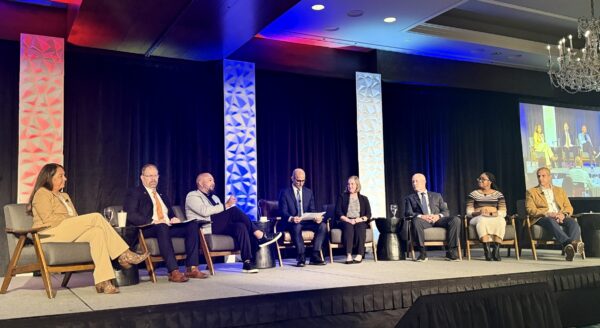
What happened: Transportation leaders and contractors from Florida, Georgia, North Carolina, and Tennessee shared lessons learned from 2024’s Hurricane Helene, emphasizing the collaboration required to reconnect communities and restore critical infrastructure after one of the most destructive storms in modern history.
What they said: Communication, preparedness, and strong partnerships were recurring themes throughout the discussion.
- Florida credited years of hurricane experience with enabling rapid pre-staging ahead of the storm. Crews, fuel, communications equipment, Starlink systems, and emergency supplies were deployed before landfall, allowing teams to assess damage and begin recovery immediately. Officials stressed that keeping the public informed with accurate, real-time information is just as important as rebuilding roads and bridges.
- Georgia faced widespread communication outages and relied on Starlink technology to reconnect first responders during the critical first 72 hours. State leaders said the storm reinforced the value of year-round training, emergency contracting readiness, and resilience planning.
- North Carolina described Helene as unlike any disaster it had previously experienced. One of the most significant recovery efforts involved restoring access to the Baxter pharmaceutical facility near Marion, a nationally critical manufacturer of IV solutions to hospitals across the nation. Transportation teams installed a modular bridge to reconnect workers to the facility and help restore a vital healthcare supply chain. State officials also acknowledged the need for stronger communication channels between state and local governments before disasters occur and are now strengthening those relationships.
- Tennessee emphasized real-time decision-making and collaboration. Senior leaders relocated closer to the affected area to speed response efforts, while recovery teams focused on restoring transportation networks, utilities, and community access. The state also highlighted its commitment to worker safety and the mental well-being of employees responding to the disaster.
What’s next: Agencies are applying the lessons of Helene by strengthening emergency plans, improving communications capabilities, investing in more resilient infrastructure, and taking a risk-based approach to protecting critical transportation corridors.
Bottom line: The panel underscored that transportation infrastructure is more than concrete and steel. During a disaster, it becomes a lifeline connecting communities to emergency services, healthcare, supplies, and recovery.
Related News
New Technologies, Traditional Methods on Stage at Work Zone Conference
What happened: Nearly 150 transportation construction professionals from across the country gathered to share…

O’Grady Says ARTBA Will Speak With a “Strong, United Voice”
What’s happening: Tom O’Grady, president of HNTB, was elected 2026-2027 ARTBA Chair during the…
CEOs Discuss State of the Industry
What happened: ARTBA’s 2026 National Convention kicked off yesterday in Kohler, Wis., with Chair…