
by Carolyn Kramer Simons, ARTBA senior director, state funding policy
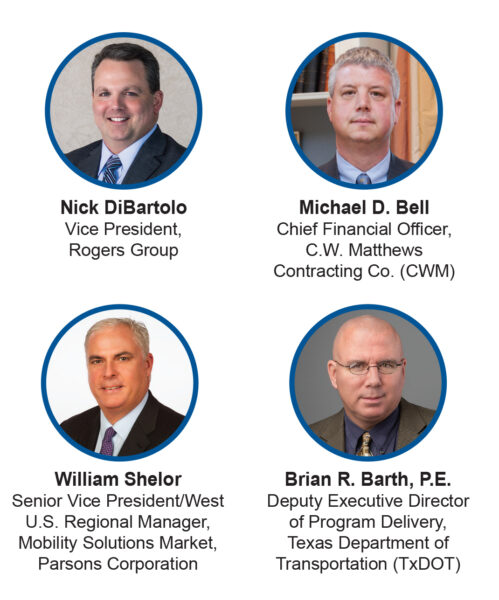
While 2024 brought many new opportunities to the transportation construction industry, it also brought some of the same familiar challenges—namely a shortage of skilled workers. We decided to check in with members of ARTBA’s Workforce Development Council to find out what new strategies are being used to hire and retain talent.
Q: Did your company make any changes to its workforce strategy in 2024?
DiBartolo: Rogers Group expanded its Heavy Machine Operator Training (HMOT) program introducing additional machine classifications and instructors. We enhanced our management training program, incorporating better structure and progress tracking. Our soft skills training offerings continued to grow, including the addition of DiSC® assessments to help supervisors understand their personality traits and adapt their leadership styles to better engage with teams. We’ve also improved our internship program by onboarding people earlier in the year, providing more structured experiences and insights into potential career paths. On an industry level, the Tennessee Road Builders Association (TRBA), in collaboration with the Tennessee Colleges of Applied Technology (TCAT), launched an apprenticeship program in the Knoxville area, which they hope to expand across several TCAT campuses in the near future.
Bell: We did not make big changes. We simply continued to build on the strategies implemented over the past five to seven years. In general, we do not have a problem hiring people. The problem is hiring skilled people and keeping them. Realizing there’s a lack of skilled trades people in the job market, we shifted our approach to employee retention and training. The longer we keep employees, the more time we have to grow them into the skilled workforce we need. We have done things to improve their overall experience in the hopes they will stay: better benefits; retention bonuses; enhanced training for field supervisors; increased vacation; and we even added a company pastor to help our employees in times of need. This approach, coupled with simulator training, and field trainers allowed us to grow our workforce.
Shelor: We continue experiencing record retention and hiring across the business, which has helped accelerate Parsons’ growth. We made several technical changes that yielded very positive results, but the largest driver is our “Imagine Next” culture, which focuses on empowering our employees to dream, design, and build innovative solutions that help our clients around the world. One change we did implement is the creation of a Strategic Staffing/Sourcing Team to enhance full cycle recruitment. This team is comprised of recruiters, a surge team, and “sourcers” focused on building robust pipelines for hiring. Next, we helped our talent acquisition team members evolve into high-performing business partners by offering career development opportunities that will allow them to influence decisions in support of our growth strategy. The approach has five pillars: monthly training sessions focused on key competencies and strategic drivers; stretch assignments/expanded roles; rotational opportunities within the firm to provide depth of subject matter and a “big picture” view of the company; external networking; and mentorships.
Barth: We initiated two new partnerships to address the transportation workforce challenges of the future. We are currently partnering with industry leaders to market the transportation industry as a career option through a program called We Build Texas Roads. Additionally, we participate in the AASHTO STEM program to help develop the workforce of the future for our industry.
Q: What tactic has been the most successful in terms of hiring new talent over the last year or two?
DiBartolo: Being visible early and often by actively engaging in the communities where we live and work. Rogers Group takes great pride in being a good industrial neighbor and a trusted partner that communities can rely on in times of need. In recent years, we’ve made significant strides in recruiting not only at colleges and technical schools but also by building stronger connections with local high schools and vocational schools. Additionally, we’ve improved our social media marketing efforts, recognizing the importance of telling our story and showcasing these careers are not just jobs—they are rewarding and fulfilling opportunities.
Bell: We are focused on high school students with an interest in pursuing a career in the trades. CWM together with the support of the Georgia Highway Contractors Association have successfully added 25 heavy equipment operator training programs in Georgia high schools. These programs prepare students across the state for a career in the highway industry. Students intern with us over the summer and are actively enrolled in work-based learning with our company during the school year. Once they graduate, they come on board full-time and are light years ahead of the run-of-the-mill applicants we normally see.
Shelor: In addition to our culture, industry-leading benefits, and a flexible work environment, we are actively involved in professional development and hiring programs through the American Council of Engineering Companies (ACEC), Women in Transportation (WTS), and Society of Women Engineers (SWE) that help attract new talent to Parsons. Our company also works closely with the Department of Defense SkillBridge Fellowships to provide military service members the opportunity to gain valuable civilian work experience during their last 180 days of service through industry training, apprenticeships or internships. Between 2021 and 2023, Parsons completed 49 SkillBridge internships with 34 of them eventually being hired. In 2024, we are on pace to exceed our target of 25 completed internships, our highest annual total
to date.
Barth: One tactic that has proven successful is sending recruiters to national transportation conferences (AASHTO, WASHTO, SASHTO, etc.). We are attracting candidates that are already in the transportation industry to come to Texas.
Q: What lesson did your company learn that you wish you would have known sooner?
DiBartolo: I wish we had started our soft skills and management training programs over a decade ago. The traditional drill-sergeant approach to frontline supervision doesn’t resonate with today’s workforce. Teams now seek mentorship, constructive feedback, and a sense of being valued as individuals who play an integral role in the organization. From a management training perspective, sustainable growth requires a strong internal bench. While hiring externally can bring fresh perspectives and foster innovation, it also risks introducing “culture creep.” Rogers Group’s success is built on a strong, cohesive culture.
That’s why we focus on developing talent from within, providing team members with the tools and opportunities to grow and succeed.
Bell: The best way to build your workforce is to train them internally.
Shelor: In today’s post-pandemic world, we’ve focused on meeting employees where they are and embracing a flexible mindset that allows us to hire individuals regardless of their location. That approach has helped us maintain record hiring and retention for the past three years. The company implemented the “Parsons Redeployment Program,” which helps employees move from demobilizing programs to new or existing programs. This is an integrated effort that supports growth, leverages technology, provides automation, and is scalable for large and small demobilizations. Key drivers include early identification of contract end dates, strategic partnerships with business, HR and Talent Acquisition and employee engagement to align skills to new opportunities. Year-to-date, we have seen an 85 percent increase talent retention among those who participated versus 2023.
Barth: The lesson we learned is that you can’t focus just on recruiting, you must also focus on retainage after you get them in the door.
Q: How do you reach out to underutilized groups, such as veterans, when recruiting? Are you seeing any progress in this area?
DiBartolo: Across our footprint, we have several military installations, and our local management teams excel in engaging with their associated community councils. This involvement allows us to support active-duty service members while also educating them about Rogers Group and the career opportunities available in the private sector after their service.
Bell: In addition to our traditional areas of recruitment, we also focus on recruiting underutilized groups by attending professional conferences such as Society of Women Engineers, National Society of Black Engineers, Society of Hispanic Engineers, Society of Asian Engineers, and Society of American Indians. Additionally, we perform considerable outreach to veterans through various means, like our partnership with the Department of Defense through the SkillBridge Program. SkillBridge offers real world training and work experience for service members who have 180 days or less before their military discharge. We continue to see progress in this area.
Q: What are you doing to help retain your employees?
DiBartolo: This has been a major area of focus for us since the “Great Resignation” sparked by the pandemic. Over the past four years, we’ve conducted two employee surveys, which have allowed us to: establish a baseline for employee satisfaction and engagement; develop and implement additional employee-focused initiatives; and evaluate the results of the second survey to identify successes and areas for continued improvement. Our ongoing efforts include enhancing the soft skills of our supervisors, promoting better work-life balance for our teams, and improving the timeliness and relevance of company communications. These initiatives have contributed to a noticeable improvement in our turnover rate, demonstrating the positive impact of our actions.
Bell: Better communication with our employees, better benefits, improved supervisor training and leadership skills. Over the past few years, we have focused on improving employees’ benefits, and in 2022 we launched an employee construction season bonus aimed at retention. We also added an additional week of vacation for our employees, night shift premiums, weekend work premiums, and increased annual bonus for hourly employees based on tenure.
Barth: We have found that the most important thing to focus on is career development opportunities, especially within the first two years (our highest turnover rate is for employees with two years or less of service time). Employees are more likely to stay if they can see they have the opportunity to build a future at TxDOT, and that their pathway to career growth is visible. To that end, our HR department has created an Onboarding Team that tracks new employees from job offer through their first few years on the job providing information on career paths and development, training, and continuing education opportunities.
Q: Looking ahead to 2025, do you think the hiring situation will improve, get worse, or remain the same and why?
DiBartolo: I think it will remain challenging, though not necessarily worse. While efforts to train new workers and enhance recruitment may improve the labor pool slightly, ongoing competition from other industries and an aging workforce could keep demand for workers high. Companies that invest in improving workplace culture, offering competitive wages, providing training and growth opportunities, and actively recruiting will be the most successful.
Bell: We believe the workforce issue will continue the same, but our approach will help us stay ahead of the curve.
Shelor: In the near term, we anticipate our recruitment strategies will remain the same. Our team has transformed to drive growth, explore mergers and acquisitions, adapt to new remote/office practices and embrace emerging technology like artificial intelligence and machine learning. Having the opportunity to adopt these changes and weave it into day-to-day operations provides a near-term path to measure results before embarking on new changes. In the long term, there are a lot of unknowns. Key drivers that will influence the job market include economic conditions, technological advancements, evolving workplace trends, and evolving skills. We are positioning by enhancing our employer branding, embracing technology, adapting to flexible work models and targeted outreach.
Barth: As it pertains to our agency, we are optimistic that our efforts will improve the hiring landscape and give us a pool of candidates to choose from in the future. Initial returns are good in that our turnover rate is improving to near record lows. We must continue various forms of outreach and efforts to educate the public on the multiple opportunities they have within our industry, but we anticipate those efforts should be fruitful.
Related News

Helping Students Unlock Opportunity in the Aggregates Industry
by Megan Bick, marketing coordinator, Jurgensen Aggregates. People who work in the mining,…

Empowering Tribal Communities: Success Stories in Workforce Development
Tia Menore (pictured) left her minimum wage job at a local…

Paving the Way for the Next Generation of Construction Professionals
by Todd Sutton, director of construction technology, Zachry Construction Corporation Several years ago,…