
by Jason Miles, P.E., project manager, Modjeski and Masters
The recent collapse of Baltimore’s Francis Scott Key Bridge has put bridge safety back in the spotlight, particularly concerning the risks posed by vessel collisions. This incident serves as a powerful reminder of the extensive impacts a major bridge failure can have—not just locally, but across connected infrastructure and the economy.
Beyond the devastating loss of life, a bridge collapse can cause widespread disruption, leading to traffic congestion and delayed freight. It can also obstruct vital shipping lanes for extended periods, affecting both local and national economies. Although vessel collisions with bridges occur more frequently than many realize, most are minor incidents on inland waterways that result in negligible to light damage and/or short-term closures. However, a significant collapse like the Key Bridge emphasizes the importance of identifying and addressing potential vulnerabilities in our infrastructure.
This event draws comparisons to the Sunshine Skyway Bridge collapse in Tampa Bay, Fla., in 1980, where a strike to a main pier by an ocean-going vessel also led to a catastrophic failure. That disaster, which resulted in 35 fatalities, acted as a critical turning point, prompting research and changes in U.S. bridge safety standards
and highlighting the need for continuous risk management and assessment.
Assessing Vulnerability: Why Older Bridges Need Attention
Bridges constructed before the 1980s, prior to the development of unified vessel collision design guidelines, may be particularly susceptible to damage. Many aspects influence a bridge’s vulnerability to vessel strikes, including pier type and locations, superstructure redundancy, size and frequency of vessel traffic, and waterway characteristics. Regular assessments of older bridges are essential, especially as conditions change such as increases in vessel sizes or changes in the waterway dynamics. If a bridge is identified as vulnerable, site-specific, tailored measures can be taken to reduce the associated risks.
Today’s engineering practices have evolved from merely reacting to disasters to proactively identifying and managing risk. This proactive approach includes not only evaluating existing structures, but also considering future risks and how they can be mitigated. For older bridges, this may mean reinforcing existing piers or constructing new, standalone protection systems. Non-structural measures can also be taken, including enhancing navigation systems on ships and port authorities requiring large vessels to be maneuvered by tugboat assist in sensitive regions of the waterway.
Building Resilience: Modern Solutions to Mitigate Risks
As our understanding deepens of the varying risks bridges face, our approach to designing and building for resilience has also advanced. Resilience, in this context, means more than just preventing damage; it’s about ensuring that a bridge can recover quickly after an adverse event. For instance, the Key Bridge is a crucial part of Baltimore’s highway network and spans an important waterway, serving one of the busiest ports on the East Coast. Ensuring that this bridge, and others like it, can resume operations swiftly after an incident is vital for both local and regional stability.
Engineers now have various tools to mitigate the risk of vessel collisions. For new bridges, thoughtful planning regarding pier type and locations during the design phase can significantly reduce the likelihood and consequences of an impact. Strategies like optimizing span lengths or avoiding sharp turns in the channel are essential considerations. For existing bridges, retrofitting solutions like dolphins or fender systems around piers can provide enhanced protection. These strategies are not just about addressing current risks, but also about future-proofing our infrastructure against emerging challenges.
The Broader Landscape: Industry Insights on Risk Management
Bridge safety and resilience are part of a broader conversation happening across the engineering industry. As we face growing threats from climate change, increasing urbanization, and aging infrastructure, the focus on risk management has never been more critical. Engineers are now tasked with designing structures that can withstand not just everyday wear and tear, but also the extreme events that are becoming more frequent.
The shift from a one-size-fits-all approach to a more nuanced, probabilistic method of design is a significant advancement in the field. This approach allows for a more tailored response to the specific needs and risks of each bridge, ensuring that critical infrastructure receives the attention and resources it requires. In many ways, this shift represents a more sustainable approach to infrastructure management, one that balances immediate needs with long-term resilience. It also recognizes the economic challenges in protecting bridges from collision and provides owners with more options to reduce risk.
Looking Forward: Adapting to New Challenges
Designing bridges to withstand extreme events—whether vessel collisions, hurricanes, or earthquakes—remains a complex challenge. The impacts of climate change and the increasing size of marine vessels only increase the level of complexity. While past practices often accepted some degree of damage and service interruption from extreme events, today’s expectations are for infrastructure to resist such events and quickly return to full function.
As we continue to manage aging infrastructure in the face of changing environmental conditions, it’s essential to adopt forward-thinking strategies. By committing to regular evaluations, leveraging advanced engineering solutions, and making informed investments, we can significantly bolster the resilience of our bridges. These efforts are critical not only for safeguarding lives, but also for ensuring that our transportation networks remain robust and reliable for future generations.
Ultimately, the future of bridge safety lies in our ability to anticipate risks and respond proactively. Through innovative design, diligent maintenance, and strategic investments, we aim to create safer, more resilient infrastructure that stands the test of time.
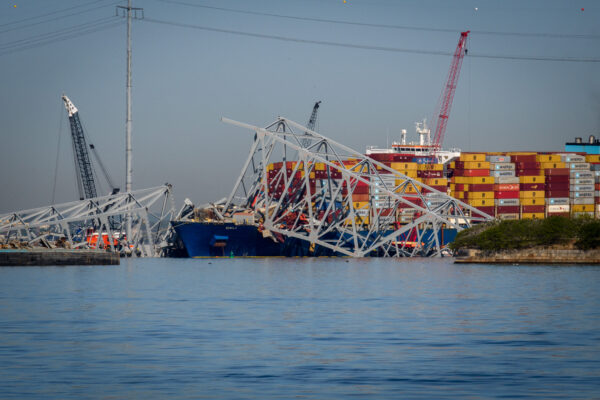
Pictured above: The collapsed Francis Scott Key Bridge rests on top of the cargo ship Dali in the Baltimore Harbor in an undated photo provided by the Maryland Department of Transportation.
Related News

What’s NEXT in P3s – Virginia’s 495 Express Lanes Northern Extension
by Beau Memory As the second state in the nation to authorize public-private…

Re-decking the Chesapeake Bay Bridge: Mission Possible
by John Schneidawind, ARTBA vice president of public affairs When it comes to…
A Bridge to Faster Travel: Transurban’s Opitz Boulevard Project
by Transurban’s Jacqueline Woodbridge, Jennifer Modugno, P.E., and Jeff Taylor, P.E. Overlooking I-95…